
Complete Guide to Studying in Germany for International Students (2026)

Imagine you’re Ali, a bright student from a bustling city in Nigeria, scrolling through endless options for studying abroad. You’ve heard a lot about Germany, that it is a land of innovation, where engineering marvels meet fairy-tale castles, and education doesn’t come with a crippling price tag. One evening, as the sun sets over your rooftop, you decide it was this time to finally take action. You’re going to study in Germany. But where do you start? Let me take you through Ali’s adventure, step by step, turning that dream into reality in 2026.

Why Germany is a Top Study Destination

Ali’s journey began with a simple question. Why Germany? As he dove into research, he discovered a world of opportunities that felt tailor-made for ambitious international students like him. Germany boasts world-class universities ranked among the global top 200, offering cutting-edge programs in fields like engineering, medicine, and data science. What hooked Ali was the affordability, as most public universities are tuition-free for all students, regardless of nationality, a policy that’s held strong into 2026. He pictured himself wandering the historic streets of Berlin or Munich, surrounded by a vibrant mix of cultures, with over 400,000 international students already calling Germany home. The strong economy, with giants like BMW and Siemens, promised not just a degree but a launchpad for a global career. And with many programs in English, Ali didn’t need flawless German to dive in. It was the perfect blend of academic excellence, cultural richness, and post-graduation prospects that made Germany his top choice for study abroad.

Overview of the German Education System

As Ali unpacked the German education system, it felt like stepping into a well-oiled machine designed for success. Germany’s higher education landscape includes traditional universities focused on research, like Heidelberg University with its rigorous standards, and universities of applied sciences emphasizing practical skills. There are 536 institutions in total, offering everything from bachelor’s to PhDs, with a strong emphasis on innovation and real-world application. Ali learned about the Bologna Process, which ensures degrees are recognized across Europe, making his future mobility seamless. The system is state-funded, keeping quality high and barriers low, but it’s competitive; admission often hinges on your high school GPA and qualifications. For Ali, it was like finding a treasure map, structured, efficient, and full of hidden gems like dual-study programs combining work and academics.

Tuition Fees and Cost of Studying in Germany

Money talks, and for Ali, Germany’s low costs were a game-changer. Public universities remain tuition-free in 2026, with only a semester contribution of €100 to €500 covering admin fees and often a public transport ticket. Private options, like IU International University, might charge €5,000 to €20,000 annually, but Alex opted for public to keep it budget-friendly. Living expenses? He budgeted €900 to €1,200 per month, including rent (€350-€700), food (€200-€300), and health insurance (€110-€120). To prove financial stability for his visa, Ali set up a blocked account with €11,904. It wasn’t lavish, but scholarships like DAAD helped ease the load, turning his study in Germany into an affordable adventure rather than a financial burden.

Choosing the Right Course and University

With his heart set, Ali turned to picking the perfect fit. He scoured the DAAD database for English-taught master’s in computer science, eyeing top spots like Technical University of Munich or Humboldt University in Berlin. Factors like location: vibrant Berlin for culture or tech-hub Munich, played a role, alongside program rankings and alumni success. Using tools like anabin, he checked if his Nigeria high school certificate qualified as a Hochschulzugangsberechtigung (HZB) aka University Entrance Qualification. It was a puzzle matching his passion for AI with unis offering strong industry ties. In the end, he chose a program that promised hands-on projects and internships, knowing Germany’s emphasis on practical learning would set him apart.

Admission Requirements for International Students

The real test came with Germany university admission requirements. Ali needed his school-leaving certificate translated and verified, proving equivalence to the German Abitur. Language proficiency was key – IELTS for English programs or TestDaF for German. Some courses demanded TestAS, an aptitude test for non-EU students, and a solid GPA to compete. He gathered transcripts, a motivation letter, and recommendations, ensuring everything shone. It felt like auditioning for a lead role, but meeting these hurdles meant he was one step closer to his dream.

Application Platforms (Uni-Assist, Direct University Applications)

Application time was a whirlwind. For many unis, Ali used Uni-Assist, paying €75 to have his docs evaluated and forwarded. Others, like Friedrich Schiller University Jena, allowed direct applications, saving time and fees. He submitted certified copies of diplomas, translations, and proof of language skills via online portals. Deadlines loomed – mid-July for winter intake and mid-January for summer 2026. Waiting for that acceptance letter was nerve-wracking, but when it arrived, Ali felt unstoppable.

Student Visa Process Explained

The visa in hand was the golden ticket. In 2026, Ali applied online via the Consular Services Portal, uploading his admission letter, blocked account proof (€11,904), health insurance, and passport. He opted for the student visa (D-visa) for long-term studies, valid up to a year, then extended it into a residence permit. Biometrics at the embassy sealed the deal. It was bureaucratic but straightforward, a bridge to his new life.

Preparing for Arrival in Germany

Touchdown in Germany! Ali’s first days were a blur of essentials that entailed registering at the local residents’ office (Anmeldung), opening a bank account, and securing health insurance. He activated his blocked account, hunted for affordable housing via student dorms, and got his semester ticket for unlimited public transport. Orientation weeks at uni helped him navigate bureaucracy and make friends. From buying a bike to learning basic German phrases, preparation turned culture shock into excitement.

How KampusKonnekt49 Supports Your Journey

Throughout his quest, Ali leaned on KampusKonnekt49, an educational consulting service and networking platform dedicated to students aspiring to study in Germany. They guided him through visa prep, university selection, and even cultural exchanges, connecting him with mentors and peers via their online community. Their experts demystified applications, offered German language tips, and hosted webinars on student life. It was like having a personal navigator, making the complex path to Germany feel supportive and connected.

It’s Your Turn

Ali’s story isn’t unique; it’s yours waiting to unfold. From the thrill of acceptance to the joy of student life in Germany, studying abroad in Germany in 2026 offers unparalleled growth. Whether it’s the tuition-free education, innovative courses, or vibrant culture, Germany transforms dreams into degrees. Ready to start your own adventure? Contact us for study consultation, and let Kampus Konnekt49 light your way!

What You Need to Know to Apply as a Nurse Trainee in Germany

A nursing traineeship in Germany is one of the most reliable pathways into a secure, well‑paid healthcare career in Europe. It combines paid practical work in hospitals with structured classroom learning, all within Germany’s respected dual vocational training system.

What is a Nursing Traineeship (Ausbildung)?

A nursing traineeship, called Pflegefachfrau/Pflegefachmann Ausbildung, is a 3‑year state‑regulated program that trains you to become a licensed nursing specialist. You learn in nursing school and on the ward, rotating through internal medicine, surgery, geriatrics, and outpatient care.

Entry Requirements for International Applicants

To start a nursing traineeship in Germany, most schools and hospitals expect:

  • Completed secondary school (equivalent to 10-12 years of schooling, often with science subjects).
  • German language proficiency at the B1-B2 level because classes, exams, and patient communication are in German.
  • Medical fitness certificate and a clean police clearance (proof of good conduct).
  • For non‑EU citizens, a national visa or residence permit for vocational training under Section 16a of the Residence Act.

How the 3‑Year Training Works

A nursing traineeship in Germany is full‑time and structured:

  • Around 2,100 hours of theory at a nursing school (anatomy, pharmacology, ethics, communication).
  • Around 2,500 hours of practical training in partner hospitals, nursing homes, and community care services.
  • Regular written, oral, and practical exams; you finish with a state exam and receive the protected professional title “Pflegefachfrau” or “Pflegefachmann.”

Salary, Costs, and Benefits

One major advantage: nursing Ausbildung is usually tuition‑free, and trainees receive a monthly stipend from their employer.

  • Many programs report first‑year stipends starting around 1,100-1,300 EUR per month, increasing in later years.
  • Training is recognised nationwide and opens doors to permanent residence, specialization (ICU, oncology, and pediatrics), and bachelor’s degrees in nursing management or education.
  • Demand for qualified nurses in Germany is high, and most graduates are employed immediately after qualification.

Steps to Start Your Nursing Traineeship in Germany

To maximise your chances:

  • Reach at least B1–B2 German through intensive courses or language schools focusing on medical vocabulary.
  • Prepare a German‑style CV, motivation letter, translated school certificates, medical fitness, and police clearance.
  • Apply directly to nursing schools and hospital networks offering Ausbildung places, often with intakes in September or October.
  • Once you have a training contract, book your visa appointment and submit your contract, language certificate, and financial proofs if required.

This combination of “earn while you learn,” secure employment prospects, and internationally respected training makes a nursing traineeship in Germany highly attractive for both local and international applicants.

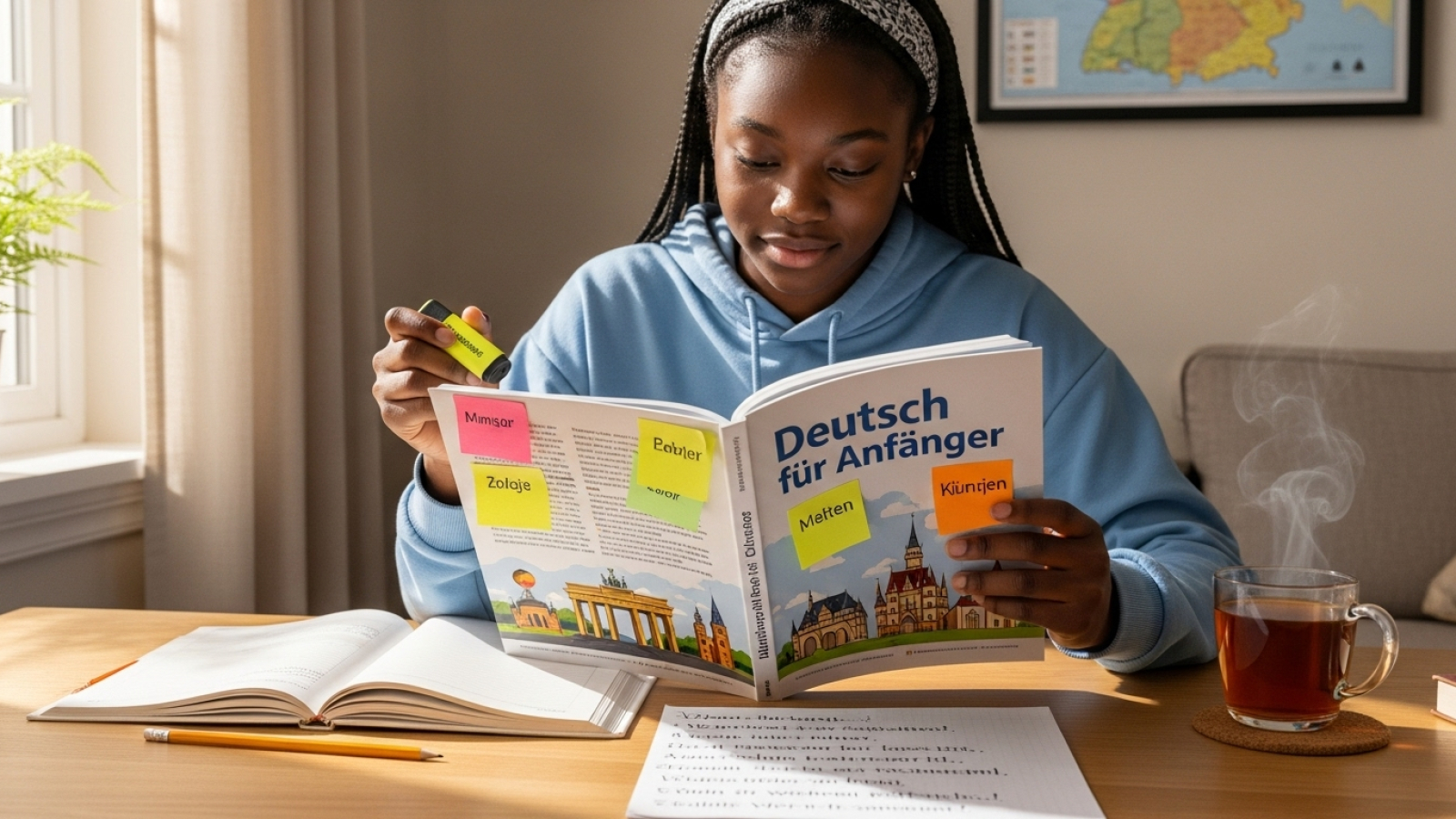
kampuskonnekt49-teen- girl-learning-teen

Learning German Isn’t as Hard as You Think

If you’ve been dreaming of studying, working, or living in Germany, and probably wondering if learning German would ever make your dream possible. You may also be thinking: “German is so hard to learn! Can I ever learn it?’’ 

But here’s the truth, learning German is not as intimidating as people make it out to be. The myth that German is impossibly difficult stops many talented students and professionals from taking the leap toward their goals. Today, let’s bust that myth and give you practical, actionable tips to make learning German not only easier but fun.

Why the “German is Hard” Myth Exists

Many of us hear scary things about German. We hear about the long words, tricky grammar, and that “harsh” pronunciation. But here’s what most people don’t know:

  • German and English are cousins.
    About 40% of basic German vocabulary has similar roots to English words (for example, Haus = house, Wasser = water, Hand = hand).
  • German is logical.
    Once you learn the patterns, everything follows a set of rules unlike English, where exceptions are everywhere.
  • Modern tools make learning easier than ever.
    AI tutors, apps, and live classes make German learning more interactive and personalized.

The real challenge isn’t the language itself, it’s sticking with a plan and practicing consistently.

Why You Should Learn German Now

Whether you want to study at a German university, find a job in Germany’s tech industry, or simply enjoy a better quality of life abroad, German opens doors to:

  • Tuition-free or low-cost education at top universities.
  • Connect with Germany’s strong job market, especially in engineering, IT, and healthcare.
  • Integrate faster and feel at home by speaking the local language.

Practical Tips to Learn German Effectively

Here are my favorite tried-and-tested strategies that make German learning enjoyable:

1. Start Small and Stay Consistent

Dedicate just 15–20 minutes a day to learning German. Even short sessions compound over time.

2. Learn Vocabulary in Context

Don’t just memorize word lists, learn words in sentences. Example: instead of just learning “Brot” (bread), learn “Ich esse Brot” (I eat bread).

3. Speak From Day One

Practice speaking early, even if it’s just simple sentences. This builds confidence and makes you comfortable forming sentences.

4. Immerse Yourself in German Culture

Listen to German music, watch German Netflix series, or follow German YouTube and TikTok creators. This makes learning natural and fun.

5. Use Modern Tools & Courses

AI tutors and online classes can adapt to your pace and learning style. This means faster progress without feeling overwhelmed.

Kampus Konnekt49: Your Partner in Learning German

At Kampus Konnekt49, we make learning German accessible, flexible, and career-focused. Here’s what we offer:

  • Beginner to Advanced Courses (A1–C1): Learn step by step, following the CEFR framework.
  • Speaking Practice Groups: Join live sessions with peers to boost your confidence.
  • CV & Career Support Get feedback on your CV and motivation letters in German to prepare for job applications.
  • University and Job Readiness: Specialized programs for international students and professionals moving to Germany.

With Kampus Konnekt49, you don’t just learn the language, you prepare for real-life success in Germany and we have been supporting many students to achieve their dreams over the years.

Learning German isn’t the mountain you think it is, it’s the bridge to your dreams. With consistent practice, modern tools, and the right support, you can master the language and unlock opportunities to study, work, and thrive in Germany.

Don’t let the myth hold you back. Your future in Germany starts with a single word, Hallo!


Ready to start learning German?
Check out Kampus Konnekt49’s German courses and get started today. Whether you want to study in Germany, land a tech job, or start a new life abroad, we’ve got you covered with flexible lessons, AI-powered tutors, and career readiness programs.

How to Win the SBW Berlin 2025 Full Scholarship

Are you dreaming of studying in Germany but worried about the cost? The SBW Berlin Scholarship for International Students (2025) offers full financial support to young, socially committed people from abroad. If you’re passionate about giving back to your community and want to study in Berlin or Potsdam, this scholarship could be your perfect fit.

What is the SBW Berlin Scholarship? The SBW Berlin Scholarship supports bachelor’s and master’s students (and in some cases, vocational training) at universities in Berlin or Potsdam.

Scholarship Benefits

  • Selected students receive:
  • Monthly stipend of about €480
  • Furnished housing in Berlin
  • Tuition support
  • Travel allowance (in some cases, for arrival and return after graduation)
  • Funding lasts for the standard duration of your program — up to 4 years.

Who Can Apply?

You are eligible if you:

  • Are between 18 and 30 years old
  • Have financial need (based on your household income/assets)
  • Hold a student visa or residence permit for study in Germany
  • Have strong academic results (minimum GPA equivalent to 2.0 in Germany)
  • Have proven experience in volunteering or social projects 
  • Plan to return to your home country for at least 18 months after graduation, or continue social work in Germany under special agreements
  • Applicants who have already lived in Germany for more than 18 months may face stricter checks but can still apply.

What SBW Berlin Expects

Scholarship holders are required to:

  • Work 2–8 hours weekly on their social project during their studies
  • Submit regular project reports and attend workshops
  • Maintain good academic performance
  • Commit to running their project in their home country after graduation

Application Process

  • Start with a recommendation letter from a non-profit in your home country. This is the first requirement.
  • If accepted, you’ll receive access to the application form. 
  • Submit documents: academic certificates, proof of income, project plan (2–5 pages), and CV.
  • Finalists may be invited for an interview to discuss their project idea.

Conclusion

The SBW Berlin Scholarship 2025 is more than financial aid, it’s a chance to gain a quality education in Germany while creating real social change. If you are committed to making a difference, start preparing your documents and apply today.

For full guidelines, visit the official site 

SBW Berlin Scholarship (https://sbw.berlin/wp-content/uploads/2025/04/Guidelines_SBWBerlinScholarship_InternationalStudents-april-2025.pdf)